
Following the latest release from Anthropic — Claude getting materially better at coding and reasoning — fear spread fast across investment circles. The narrative was simple and brutal:
If AI can write software, who needs SaaS companies?
Public markets reacted accordingly. A basket of software names — Salesforce, ServiceNow, Atlassian, HubSpot — saw drawdowns that were less about quarterly performance and more about existential anxiety.
“SaaSpocalypse” started circulating.
The general explanation goes like this:
- The cost of code is collapsing.
- AI can rewrite legacy systems.
- Enterprises will rebuild everything with agents.
- SaaS margins structurally compress.
- Value migrates “down” to foundation models and compute.
It’s a powerful story.
But as practitioners — shipping AI systems in factories, not debating them on social media — our view from the ground looks more nuanced.
This is an attempt to share that view.
First principles: what AI is actually doing
Let’s strip the hype and go back to fundamentals.
AI, today, is doing two economically meaningful things:
- Collapsing the marginal cost of a line of code.
Generating software is becoming dramatically cheaper and faster. - Mimicking repetitive human reasoning via pattern matching.
Especially in tasks that are structured, textual, decision-heavy, and rule-based.
That’s the bulk of it.
It is not zero-cost enterprise architecture.
It is not autonomous corporate governance.
It is not “free ERP replacement in a weekend.”
It is cheaper code and scalable reasoning.
The $300B question is therefore straightforward:
If those two forces are real, who captures the value?
Obvious winners (mostly priced in)
Some winners are easy to identify.
- Energy demand increases.
- Chips become strategic assets.
- Compute infrastructure becomes geopolitically sensitive.
The market has largely repriced those layers already.
The less obvious — and more dangerous — question sits higher in the stack.
The LLM question: telcos or Google?
Foundation models face a structural fork in the road.
Are they:
A. Telcos?
Infrastructure, capital-intensive, essential, but commoditized over time with average returns.
Or:
B. Google Search circa 2005?
A defensible algorithm + data + distribution moat that becomes a tollbooth on the entire digital economy.
History gives us both templates.
Telecom operators built indispensable infrastructure and captured mediocre returns.
Search engines built indispensable infrastructure and captured extraordinary returns — largely due to network effects, distribution control, and advertising leverage.
If LLMs commoditize toward near-zero margins, value shifts upward (applications) and downward (chips/energy).
If LLMs consolidate into a few dominant players with structural API-level lock-in and distribution power, they extract a tax on the global software economy.
The answer to this question may trigger a massive repricing cycle — possibly an AI-era equivalent of the internet bubble unwind.
And the uncomfortable truth is: nobody knows.
What happens to SaaS?
There are realistically three scenarios.
Scenario 1: Enterprises go “full AI,” SaaS collapses
In this version:
- Companies rebuild internal systems.
- Agents orchestrate everything.
- Legacy SaaS becomes obsolete.
- Application-layer margins structurally compress.
Intellectually seductive.
Operationally unlikely — at least near term.
Why?
Because I have seen how enterprises actually operate.
Most companies are:
- Not good at shipping software.
- Not good at maintaining AI in production.
- Not good at managing probabilistic systems.
- Very bad at replacing mission-critical systems.
Even if code becomes cheaper, complexity does not.
Compliance does not disappear.
Auditability does not disappear.
Access control does not disappear.
Edge cases multiply, they do not shrink.
In manufacturing alone, replacing an ERP is not an engineering decision. It is a multi-year socio-technical migration involving operations, finance, HR, and external partners.
Cheap code does not equal cheap system.
Scenario 2: SaaS mutates, absorbs AI, eats labor cost
This is the most plausible path in my view.
The best SaaS companies:
- Own workflow.
- Own usage data.
- Sit inside mission-critical processes.
- Understand domain edge cases deeply.
- Have distribution and trust.
If they successfully embed AI:
- They stop selling seats.
- They start selling outcomes.
- They compress labor cost inside their customers’ P&L.
They become economic leverage engines.
We have done this times at OSS in operational contexts:
- CAPEX deployment.
- Visual quality control.
- Workforce planning.
- Industrial quoting.
- Waste optimization.
In every case, AI did not replace the SaaS layer.
It amplified it.
The SaaS layer provided:
- Deterministic backbones.
- Guardrails.
- Structured workflows.
- Permissioning.
- Versioning.
- Human-in-the-loop validation.
Fully agentic systems today are not reliable enough for real-world operations. They are highly context-dependent and variance-prone.
Without workflow design and structured supervision, they drift.
The companies that understand this — that position humans as managers of AI systems rather than competitors — are seeing durable value creation.
Scenario 3: Incumbents are weak, challengers rebuild everything
There is a harsher possibility.
If legacy SaaS players:
- Protect maintenance revenue.
- Move too slowly.
- Underestimate architectural shifts.
- Add “chatbots on top” instead of rebuilding the core (Hi, Dassault !)
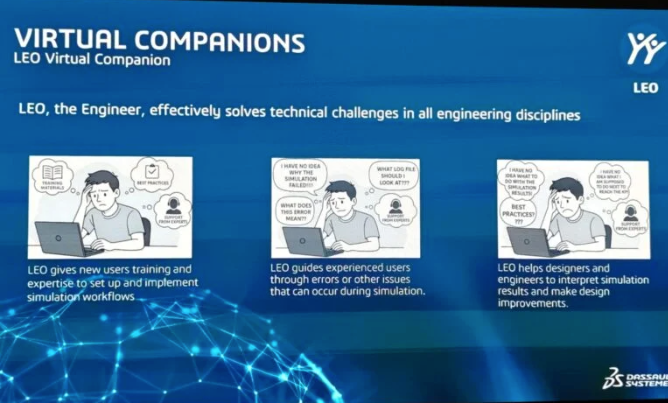
Then AI-native challengers rebuild vertical stacks from scratch.
History supports this pattern:
- Mainframe → client-server.
- On-prem → cloud.
- Monolith → API-first.
- ERP suite → best-of-breed SaaS.
In that case, value doesn’t disappear. It transfers.
And transfers are rarely gentle.
Second-order effects nobody talks about
There are a few deeper shifts underway.
1. Margin compression in services first
If code is cheaper and reasoning is scalable, professional services and consulting margins get hit before SaaS.
Custom implementations, integration-heavy projects, configuration layers — those become more automatable.
Ironically, SaaS platforms that productize these layers may strengthen.
2. Labor reallocation inside enterprises
If AI eats 20–40% of certain knowledge tasks:
- Headcount may reduce in some functions.
- Or the same headcount handles more complexity.
- Or margins improve structurally.
- Or margins gets passed down to the client and/or consumer.
SaaS vendors that can quantify this — not feature-sell it — win.
The pitch is no longer:
“We have AI.”
It is:
“We believe we can expand your EBITDA by 300 basis points. Do you buy that?”
That conversation is different.
3. Volatility increases
Probabilistic systems introduce variance.
Variance introduces risk.
Risk demands governance.
Governance increases switching costs.
Ironically, the more AI you add, the more valuable robust workflow layers become. One of my personal bets is that CI/CD will probably 10x in the coding community, and appear everywhere else in organizations.
A personal observation from the field
The strongest software companies we know are actively trying to destroy their own motherships.
Founder-led strike teams.
Internal AI labs.
Parallel architectures.
Willingness to break pricing models.
The weaker ones are adding a “copilot” in the corner and calling it transformation.
There is a massive difference between:
- “ChatGPT on top”
- And “product rebuilt around probabilistic reasoning, including core database”
The former is cosmetic.
The latter is architectural.
From what we see in factories and operational environments:
- Pure autonomy is still unreliable.
- Context is everything.
- Error tolerance is domain-specific.
- Humans remain essential supervisors.
- Strong data foundations have to be built and maintained.
The SaaS muscle of designing workflows and placing humans as system managers is proving decisive.
Where I place my chips (not financial advice)
Yesterday, I bought a basket of SaaS companies for roughly 5% of my net worth. I overweight the ones that I have confidence in for their organizational capabilities and shorted some (Hey, Dassault !).
Not because I think the fear is irrational.
But because I think:
- Panic often runs faster than structural change.
- Workflow ownership is durable.
- Context beats generic capability.
- Enterprises do not rebuild civilization in 12 months.
- Mutations tends to reward builders.
- And some companies are still builders at heart, while some others are not.
Maybe this is early.
Maybe this is wrong.
Time will tell.