Maths & Science
Notes and explorations in mathematics and science.
23 entries
- Navier–Stokes — what OpenAI actually proved
In September 2026 OpenAI said an internal model, run as ten thousand agents for eighty-eight hours, had cracked Navier–Stokes. What was really proved is narrower and more interesting: a Lean-verified finite-time blow-up in the forced case — the softer side of the problem — with the unforced Millennium question still wide open, and an ugly fight over credit that says more about where AI is taking mathematics than the theorem does.
- Emmanuel Todd — the family structures under everything
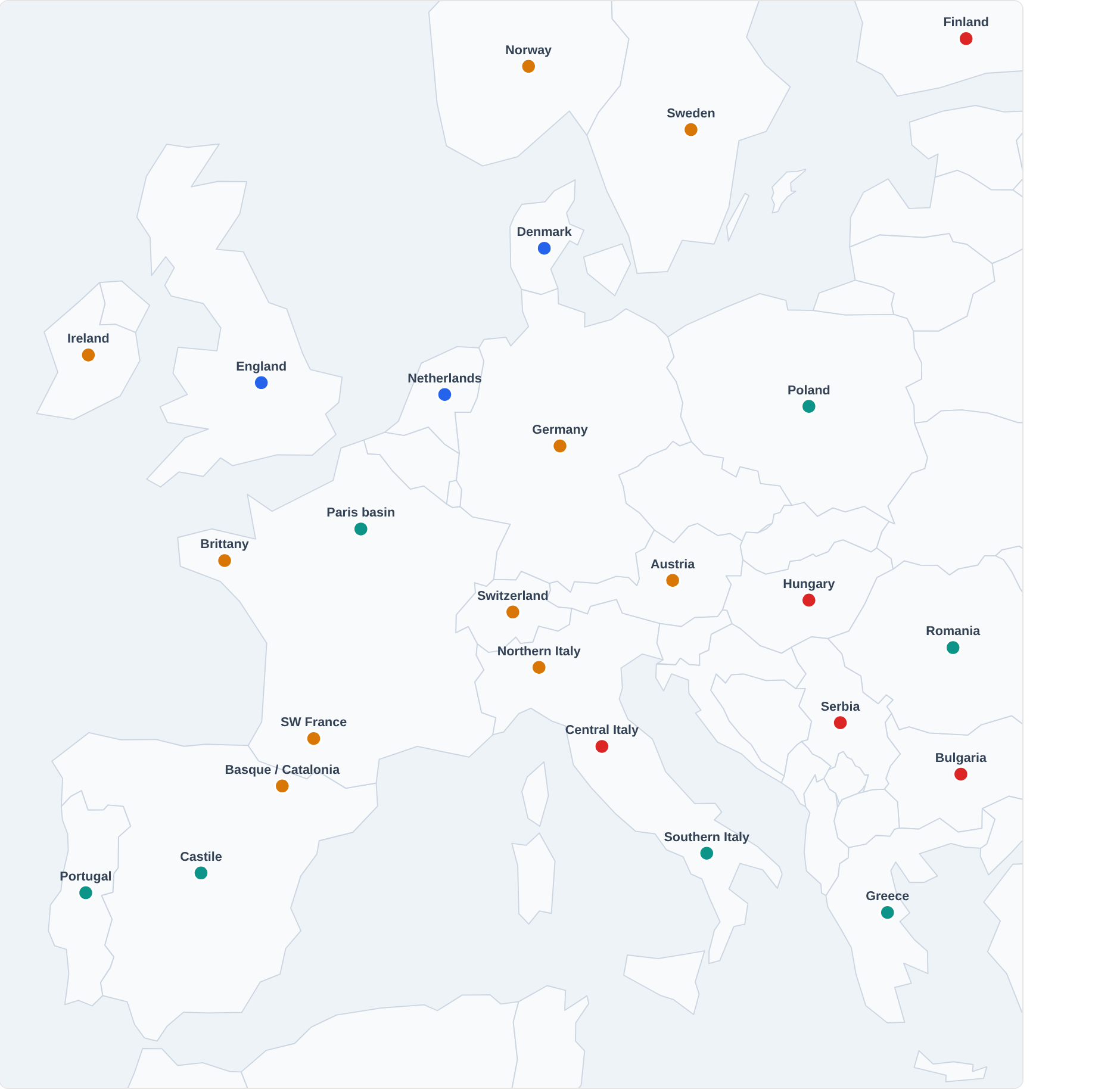
The French anthropologist-demographer's claim that the deep structure of the peasant family — liberal or authoritarian, equal or unequal — pre-shapes a region's ideology, literacy and politics. The typology, a map of Europe coloured by family type, the famous communism correlation, the predictions it got right (the USSR's fall), and the serious case against it.
- The power law — why it is everywhere, and how it should change your thinking
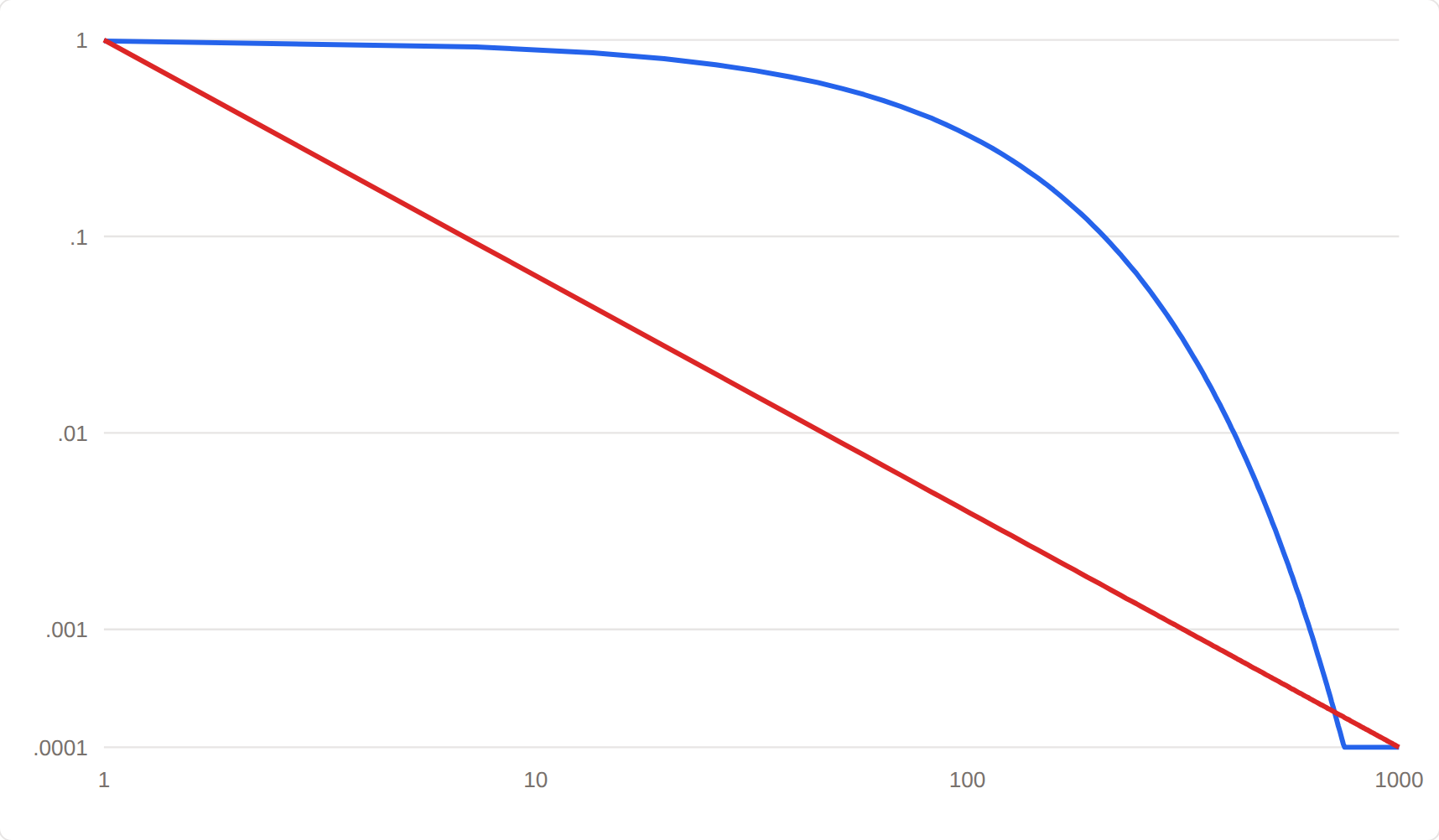
Power laws govern earthquakes, cities, wealth, words and web links — almost never bell curves. What a power law is, the deep reason (scale invariance) it keeps appearing, the handful of mechanisms that generate it, and how heavy tails should reshape the way you reason about averages, rare events and risk. With an interactive log–log visual.
- Prompt Injection — a reader's summary
The attack where text an AI system merely reads turns out to also be instructions it obeys: Simon Willison's 2022 coinage, the confused-deputy mechanism behind it, and why it resists the fixes that worked on SQL injection.
- World population density — a flat map of where humanity lives
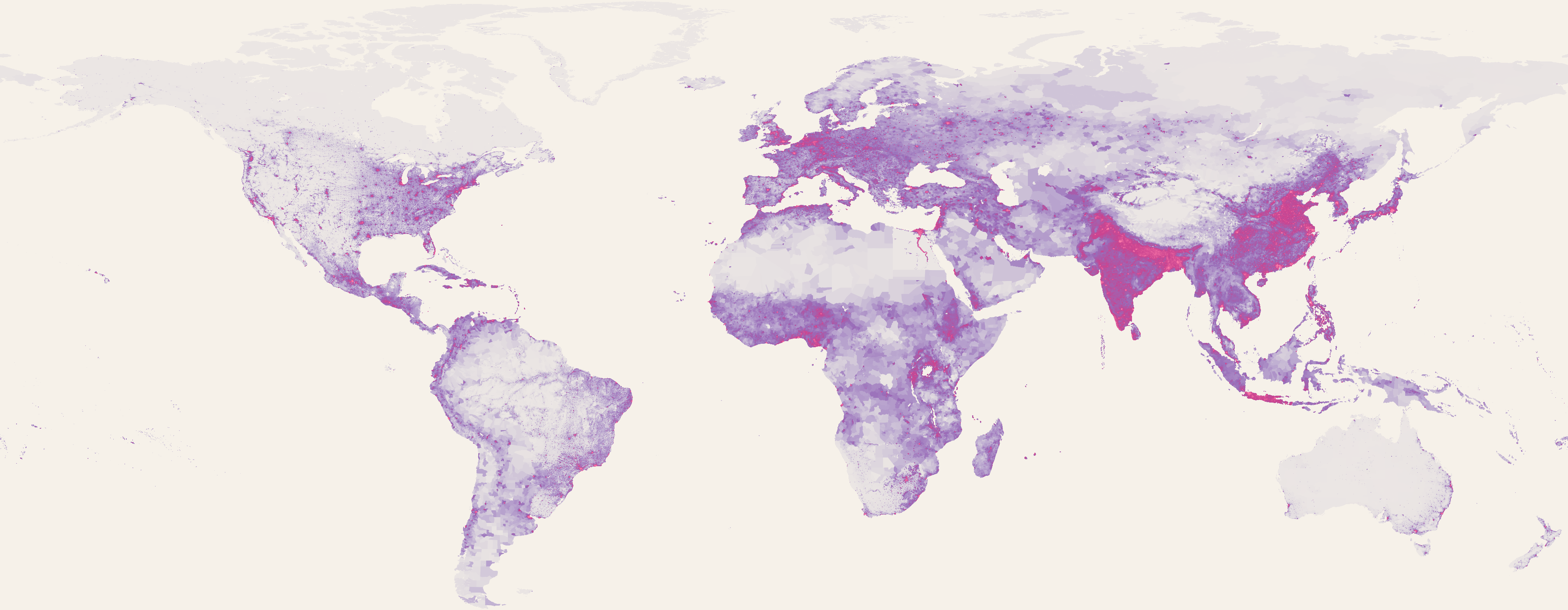
An equirectangular map of where people actually live: every inhabited cell of a 0.1° grid tinted by its density in people per km², on a logarithmic scale. Built from NASA SEDAC's Gridded Population of the World, adjusted to 2015 UN totals.
- Hairlines — why different people have different hairlines
The hairline is a border drawn before birth: how the frontal follicle field is patterned in the womb, the polygenic genetics behind its shape, the DHT biology that makes it recede, the widow's-peak myth, and why sex and ancestry shift the picture.
- The Prisoner's Dilemma — a reader's summary
Merrill Flood and Melvin Dresher's 1950 RAND game, Albert Tucker's prison-sentence framing, and how Robert Axelrod's 1980 tournaments found a simple rule that beat pure self-interest.
- Amara's Law — a reader's summary
Roy Amara's dictum that we overestimate a technology's short-run effect and underestimate its long-run one, the murky attribution behind the quote, and the Gartner Hype Cycle it inspired.
- The Lindy Effect — a reader's summary
A 1964 essay on comedians' career lengths, the power-law math Mandelbrot and Taleb built under it, and why “it's Lindy” became shorthand for betting on whatever has already lasted.
- Jevons Paradox — a reader's summary
Jevons's 1865 coal-engine observation, the Khazzoom-Brookes formalization, and why cheaper AI inference is argued to raise total compute demand rather than shrink it.
- The Jacobian Conjecture — the 85-year-old problem a machine broke
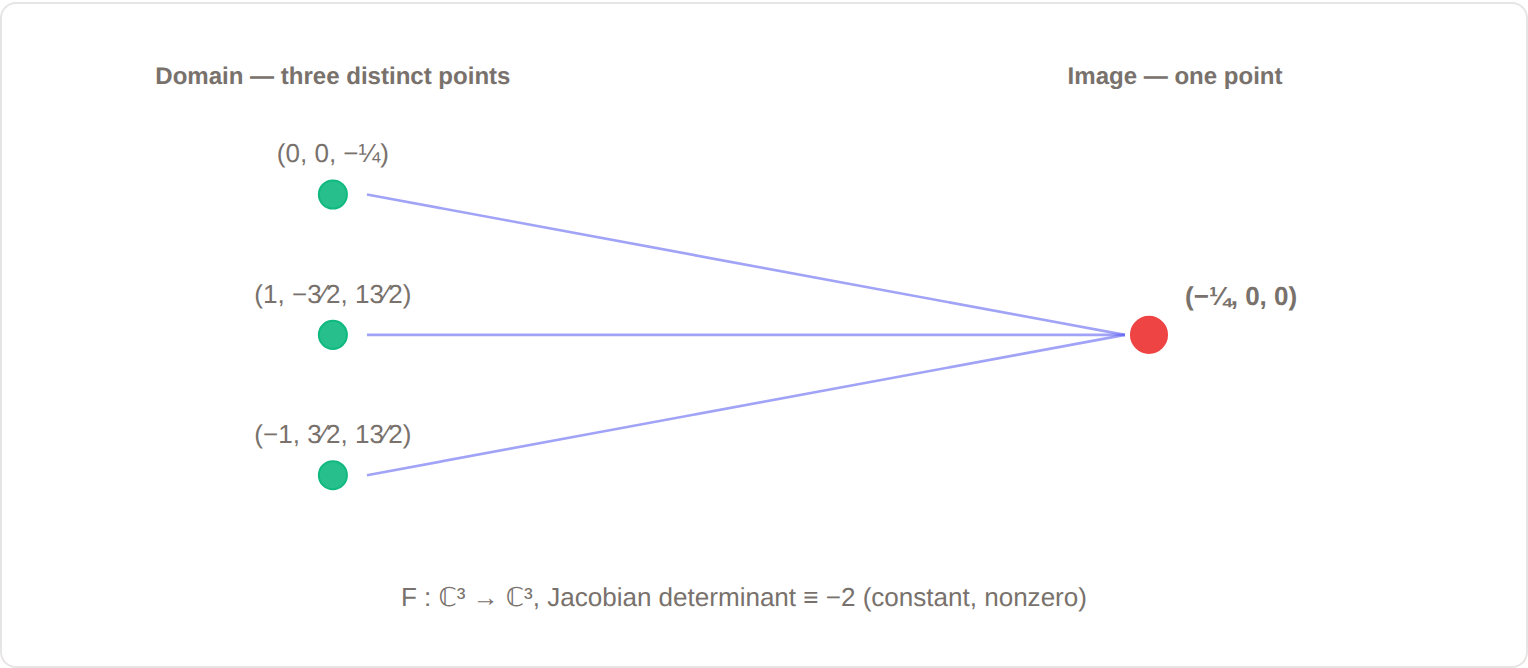
Keller's 1939 conjecture, why it resisted for eighty-five years, and the single self-checking counterexample — surfaced by an AI — that appears to end it.
- A Mathematical Theory of Communication — a reader's summary
Shannon's 1948 paper: the bit, entropy, channel capacity — and the limits everything digital lives inside.
- Attention Is All You Need — a reader's summary
The 2017 Google paper that introduced the Transformer — history, authors, main ideas, critiques, and impact on everything since.
- Distillation — how models copy models, and how you catch them
Soft targets and KL divergence, watermark radioactivity, Cohen's kappa on shared errors — the statistics of proving a model copied a model. Also in Business.
- LeCun against the LLM — the world-model bet
Yann LeCun's critique of autoregressive LLMs, the JEPA world-model program, and the mathematics underneath the bet.
- Mathematical map
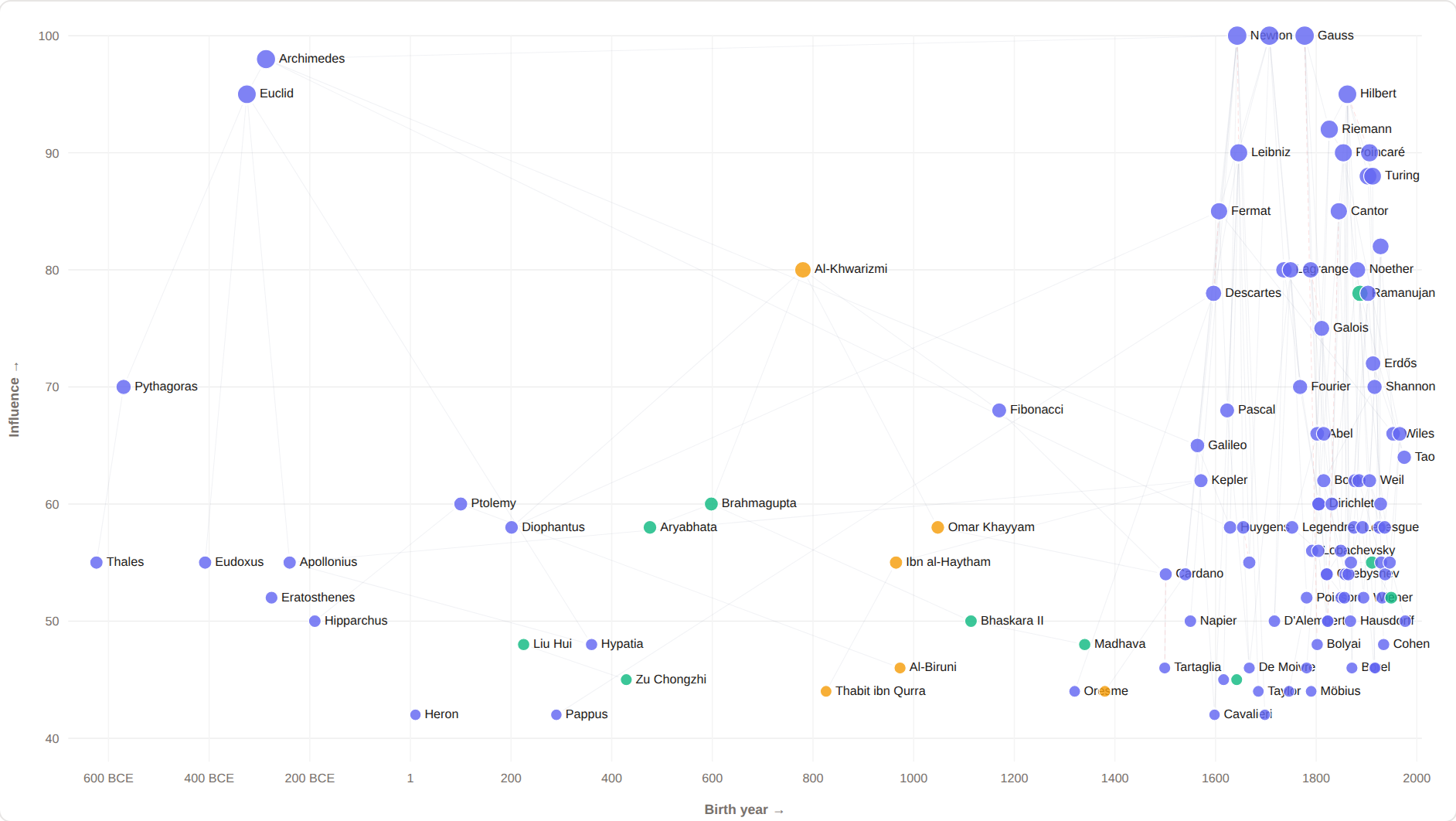
The major mathematicians placed on two axes — time and influence — linked by known lines of influence.
- Mathematicians & their ideas
Every mathematician from the map, with their main ideas — one card per idea.
- Model Collapse — a reader's summary
What happens, mathematically, when generative models are trained recursively on their own outputs — “Habsburg AI,” the 2024 <em>Nature</em> paper, and how worried the data wall should make us.
- P vs NP — history, implications, state of affairs
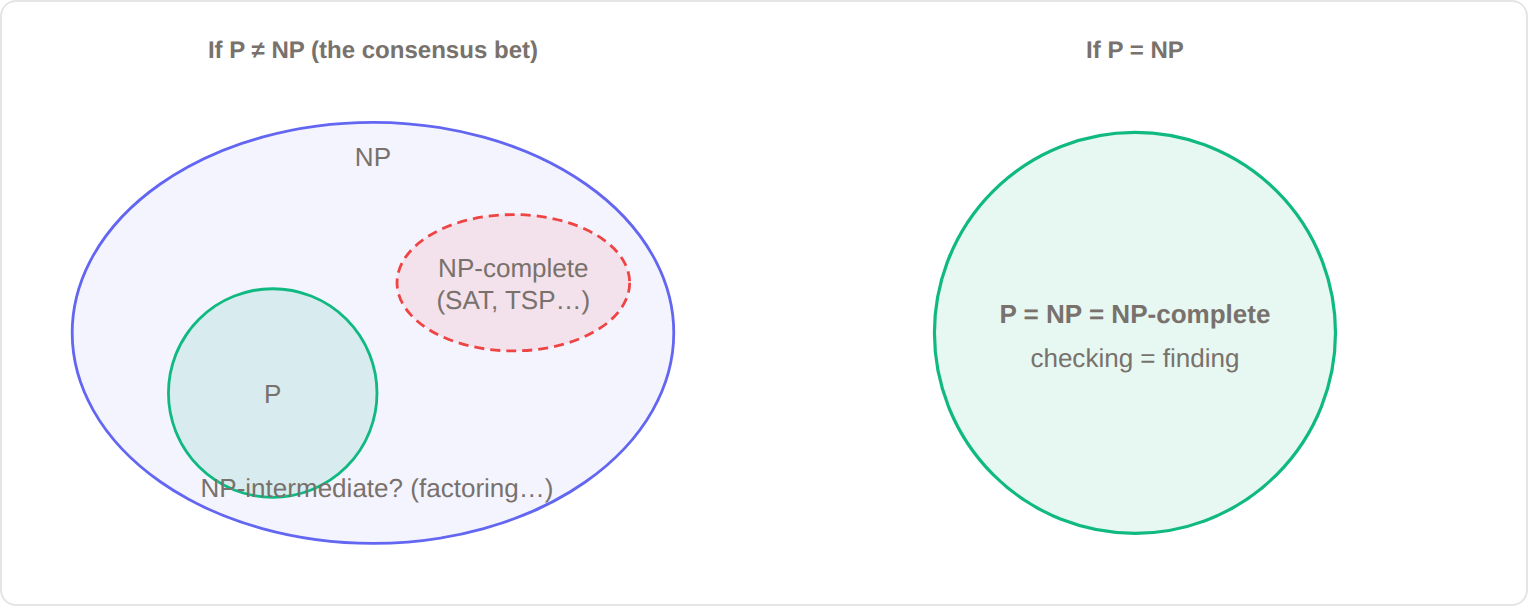
The central open problem of computer science: is finding an answer fundamentally harder than checking one?
- P(doom) — the number the valley can't agree on
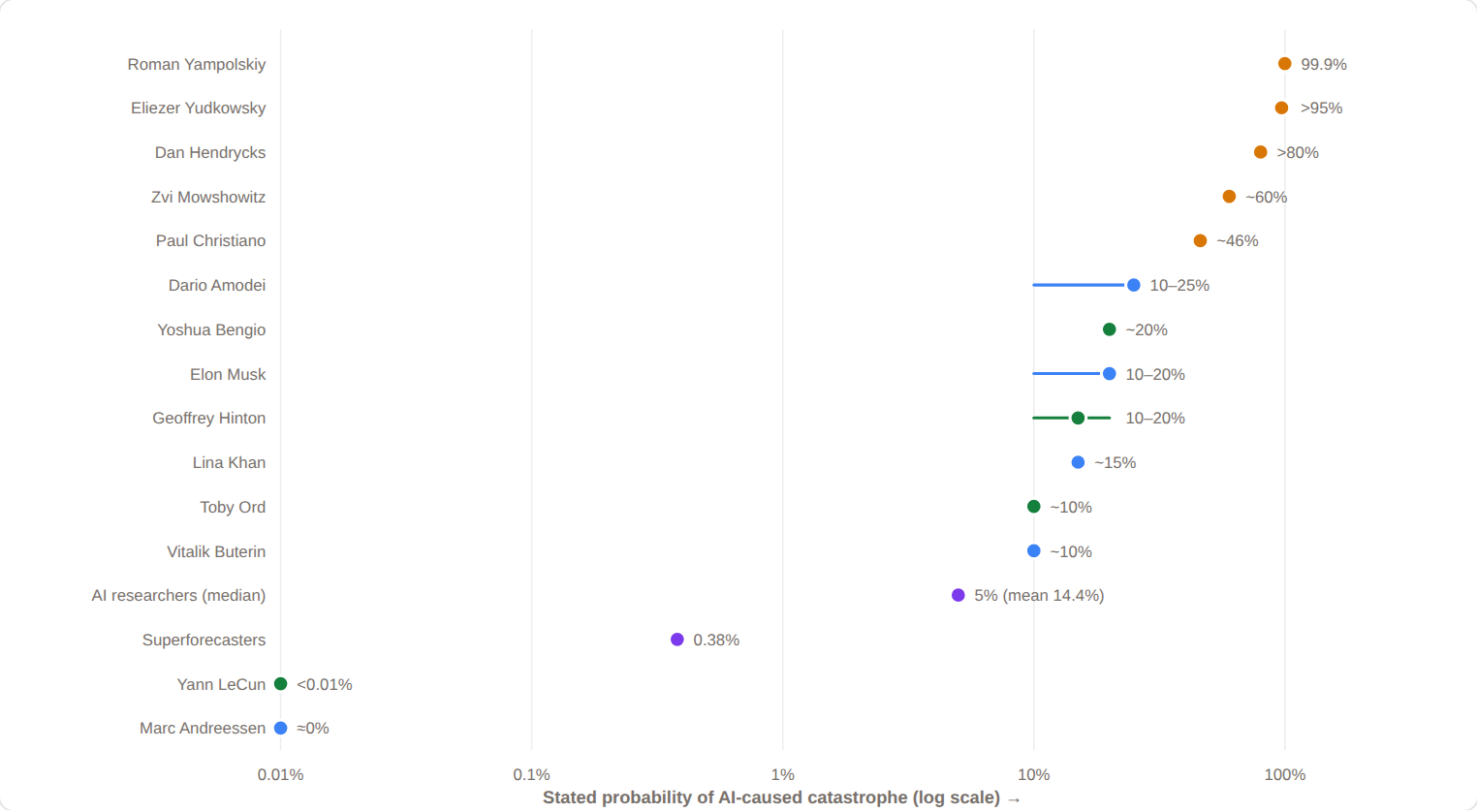
Publicly stated estimates span four orders of magnitude. What P(doom) is as a mathematical object, why Aumann's theorem says the spread shouldn't exist, and the consensus that isn't a number.
- Scaling Laws for Neural Language Models — a reader's summary
The 2020 OpenAI paper that turned “bigger is better” into a measurable curve — and the debate it started.
- The Bitter Lesson — a reader's summary
Richard Sutton's 2019 essay: search and learning, scaled with compute, beat encoded human knowledge — the manifesto behind the scaling era.
- Vibe Coding — a reader's summary
Karpathy's term for building software by prompting a model and accepting its output on faith — where the wager pays off, and where it silently doesn't.




_-_Google_Art_Project.jpg?width=800)