Business
Notes and visualizations on markets and technology.
48 entries
- 10×, 20×, 30× revenue — what has to be true
A revenue multiple is a discounted cash flow run backwards. What 10, 20 and 30 times revenue assume about growth, retention and margin; why zero interest rates inflated every financial asset and tech most of all; and whether the 2022 reset destroyed value, destroyed price signals, or only moved money around. With charts and a worked model.
- Doom Spending — a reader's summary
The November 2023 Credit Karma survey that put a number on spending money to cope with economic anxiety, the doom-scrolling wordplay behind its name, and why the same 27% figure got reattached to election stress a year later.
- Girl Math — a reader's summary
The July 30, 2023 New Zealand radio segment that coined it, the August 2 TikTok that turned it into a spending-rationalization genre with 232 million #girlmath views, and the benevolent-sexism critique that followed within weeks.
- Loud Budgeting — a reader's summary
The December 29, 2023 TikTok in which comedian Lukas Battle named 2024's answer to "quiet luxury," the CNBC interview where he admitted it started as a joke, and the class-privilege pushback that followed within weeks.
- The Creator Economy — a reader's summary
The 2007 YouTube Partner Program, Patreon's 2013 pivot, the 2021 funding boom, and the power-law math that means most of the roughly 50 million people counted as "creators" earn almost nothing from it.
- The academic critiques of GDP
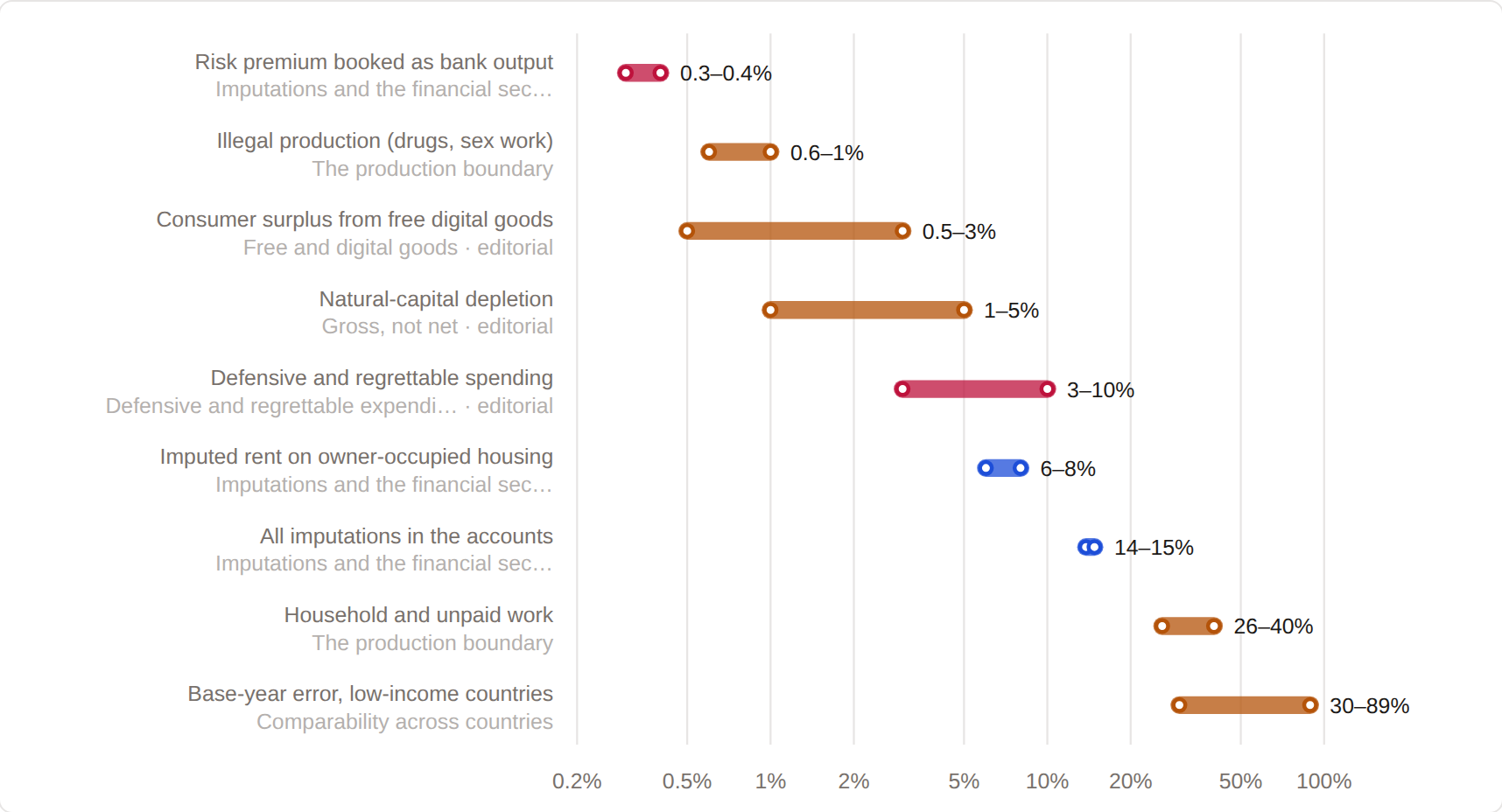
A review of what economists actually establish against gross domestic product, organised around the three conditions under which a price-weighted index can be read as welfare — Kuznets's own warning, the production boundary, defensive spending, natural capital, distribution and the index-number problem — with a chart sizing each gap as a share of GDP.
- When to do margin
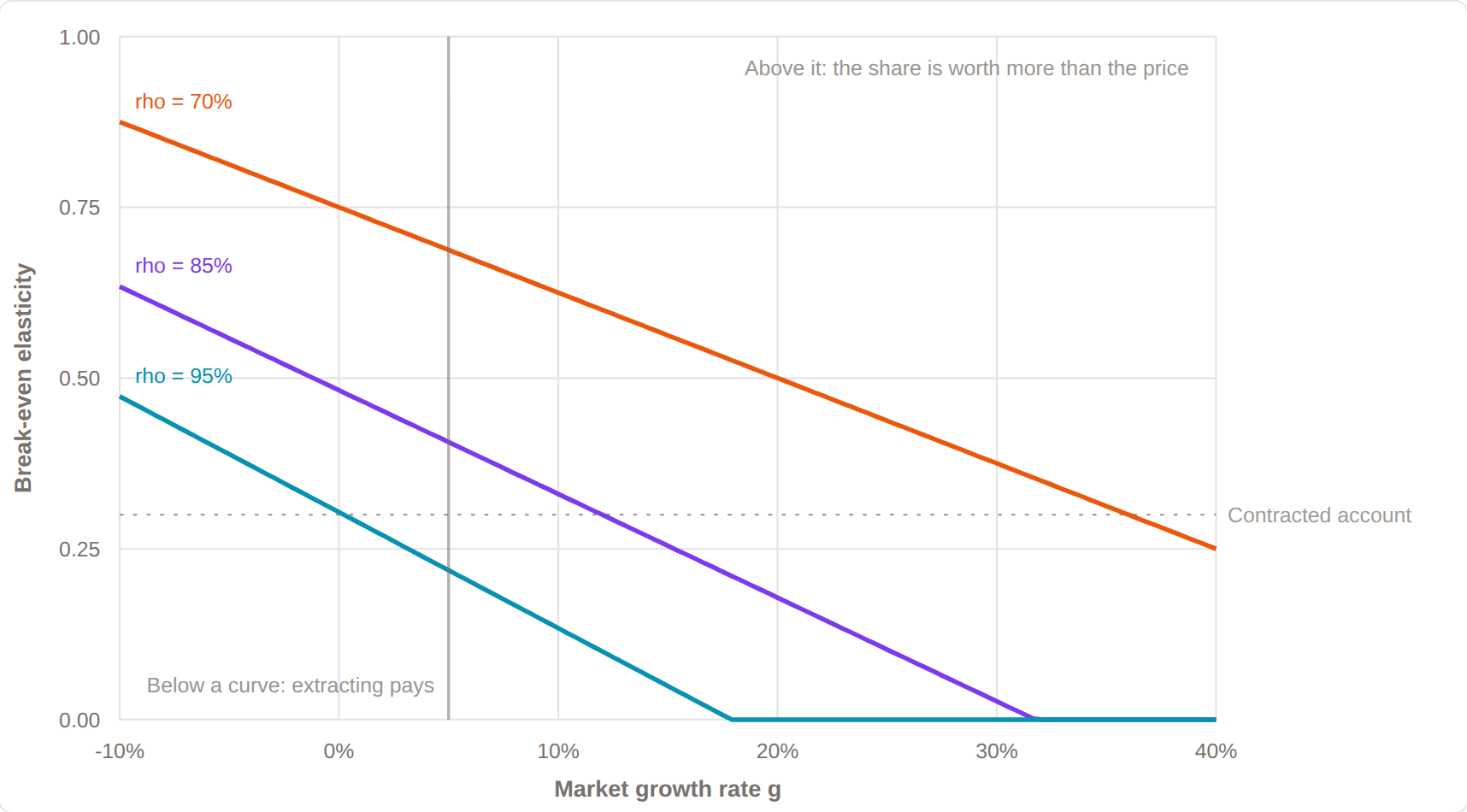
An academic review of margin extraction as a strategic move — when to take price out of an account, a market or a geography. Built on one decision rule and eighty years of literature, from Lerner and Ramsey to Klemperer and the unsettled mark-up cyclicality debate.
- Where is the margin in the world?
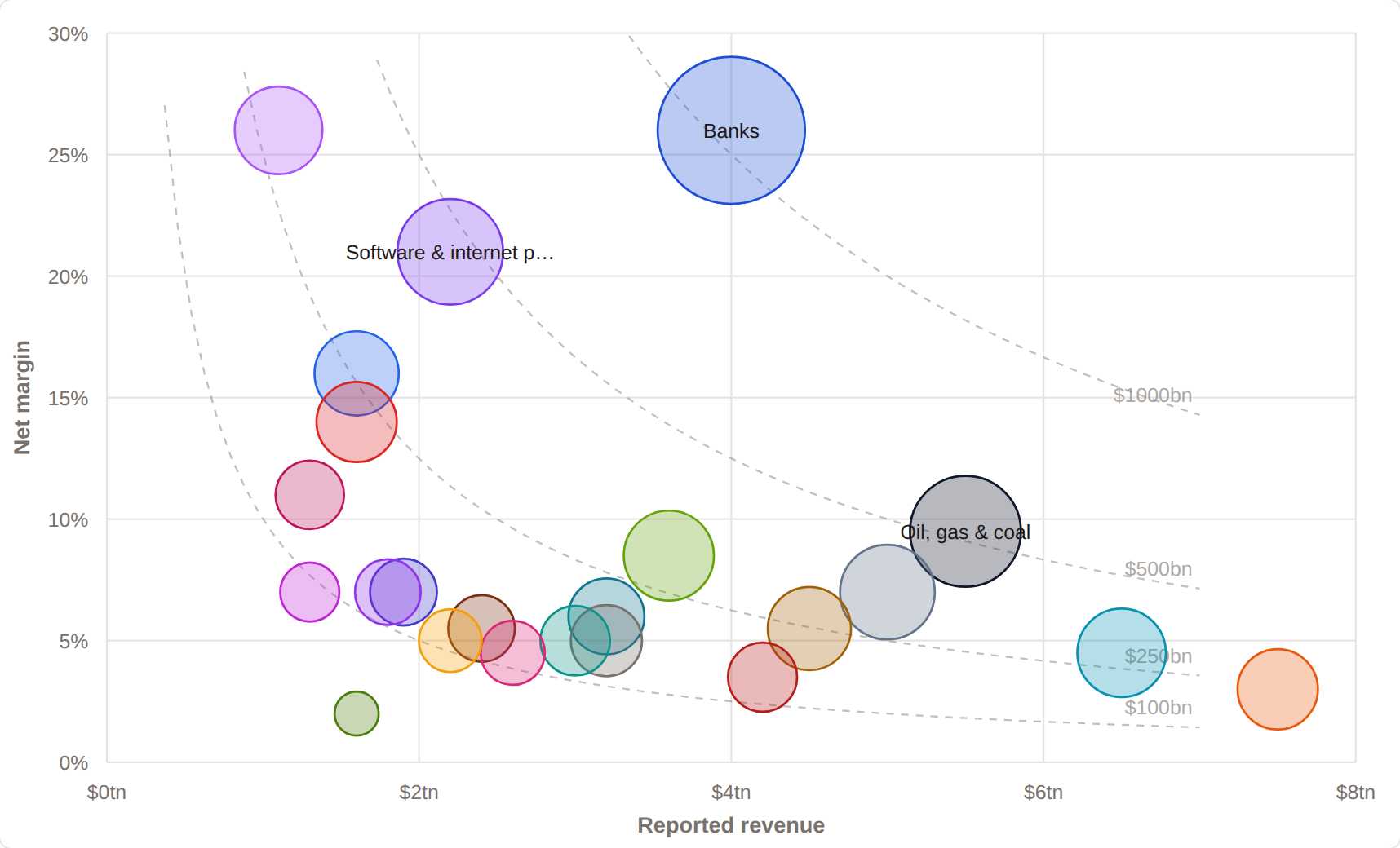
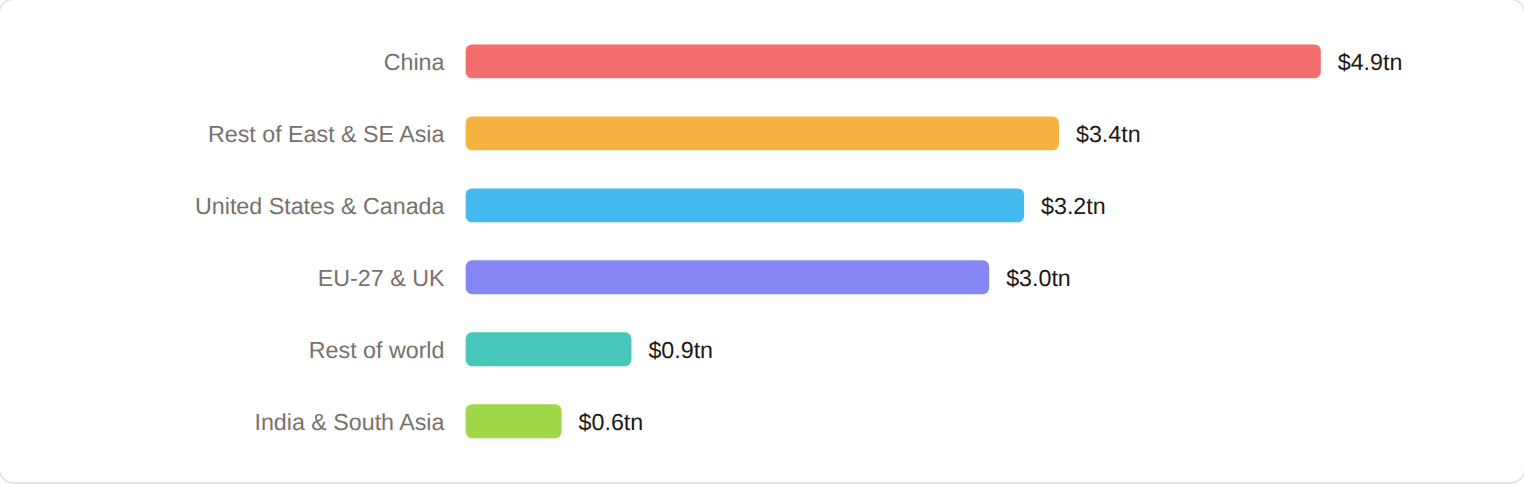
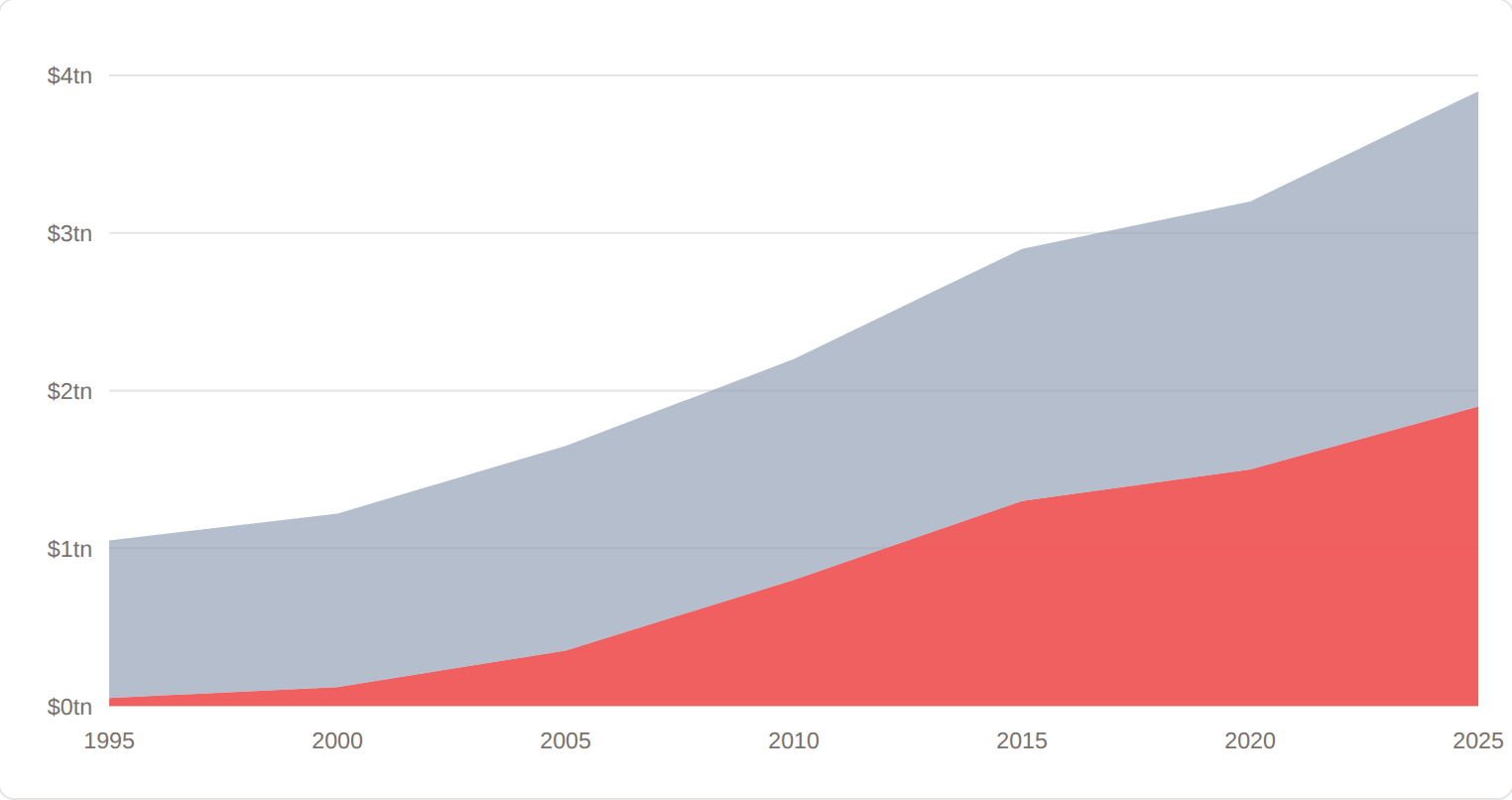
A sizing of the global corporate profit pool: the ~$5.7tn companies keep out of ~$72tn of revenue, where it accrues by sector and by geography, where it is systematically destroyed, and the four structures a durable margin can be made of. With charts.
- Shrinkflation — a reader's summary
The blend of "shrink" and "inflation" that named a package getting smaller while the price stays put — Toblerone's 2016 triangle gap, and the France 2024 law forcing supermarkets to post a sticker.
- Public spending in France
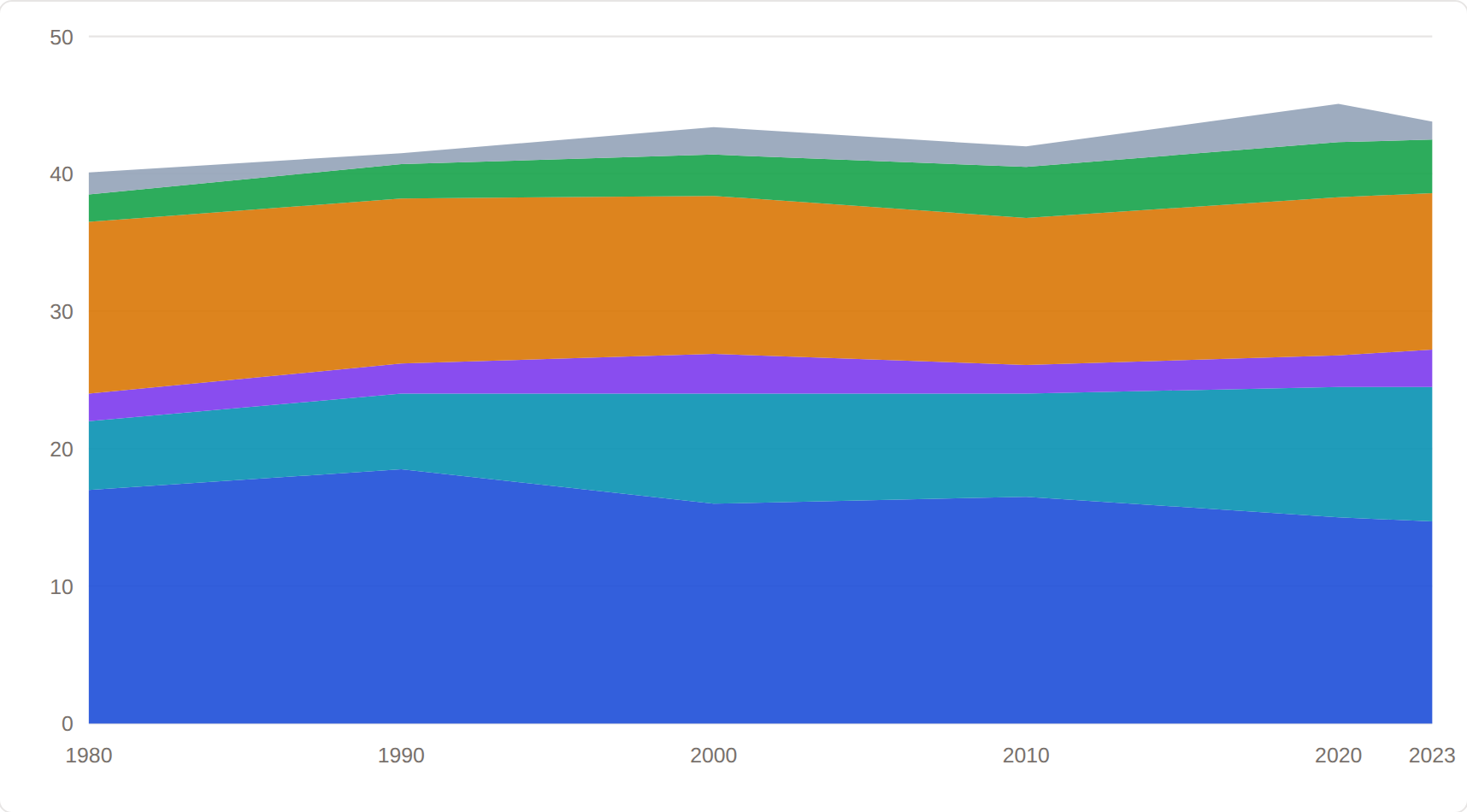
France runs the biggest state in the rich world — about 57% of GDP. Where the money goes (social protection, health, education, debt interest), how each function has grown, the deficit and debt it accumulates, the political tradeoffs, and the effect on growth. With charts.
- Taxes in France
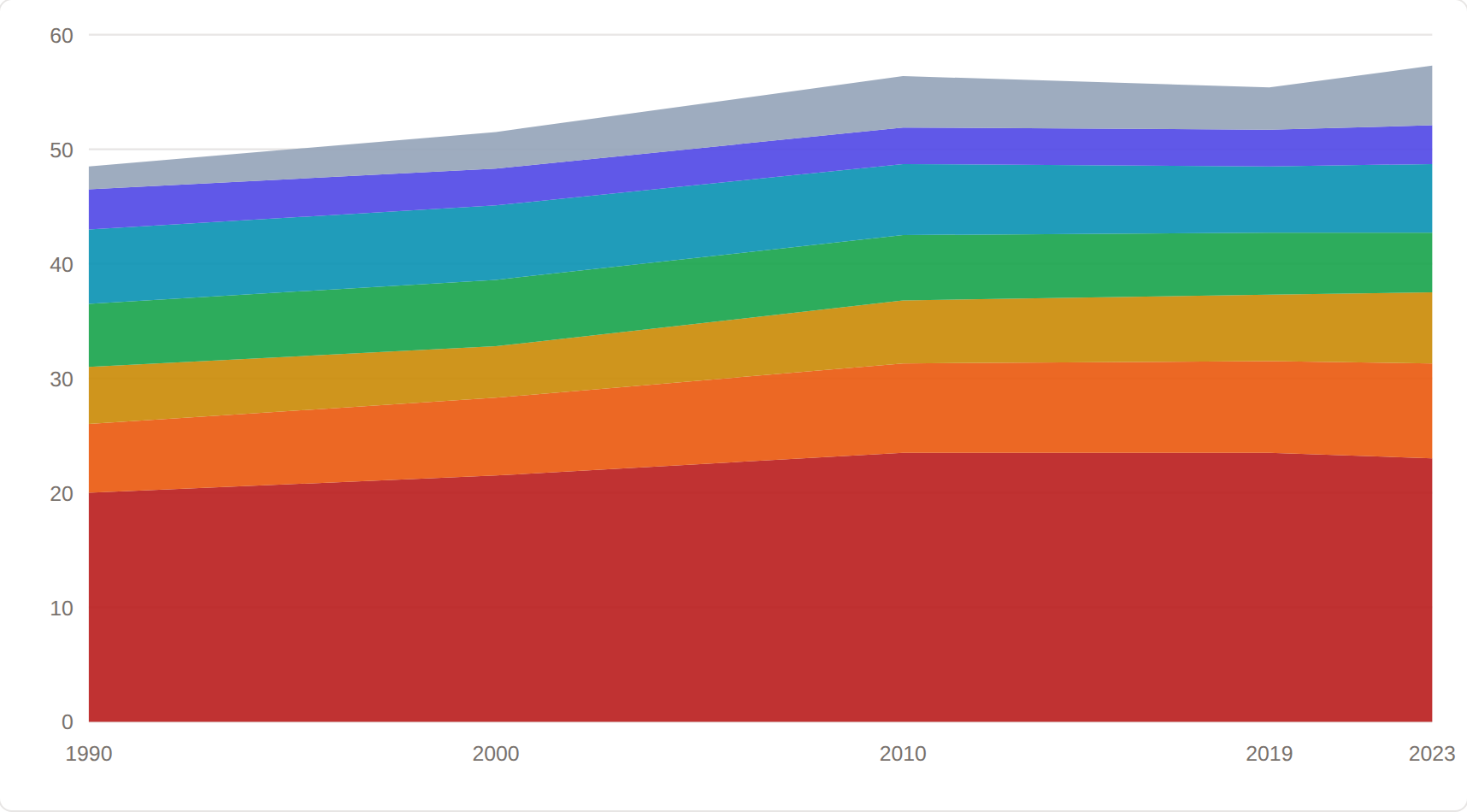
France collects around 45% of GDP in tax — among the highest in the OECD. What that take is made of (social contributions, CSG, VAT, income and corporate tax, property), how each has moved as a share of GDP since 1980, who bears it, the political tradeoffs, and what it does to growth. With charts.
- Lean: The Evidence
A sourced test of the theory that Lean is a cult that crowds out strategy and does little for long-term performance. A split verdict: the operational effects are real and well-measured, but the leap to durable financial performance isn't — and Michael Porter's “operational effectiveness is not strategy” names the crowding-out worry better than the cult charge does.
- Toyota: origins, dominance, and the China reckoning
A deep dive: from Sakichi Toyoda's automatic loom to the Toyota Production System, the rise to the world's largest automaker, why it bet on hybrids through the electric decade, and how it plans to counter BYD and the Chinese industry now rewriting the business — localizing in China, a solid-state battery leap for 2027–28, and hybrid profits to fund the pivot.
- Quiet Firing — a reader's summary
The mid-August 2022 tweet reply that named quiet quitting's mirror image, and the survey statistics attached to it later that don't quite agree with each other.
- The Hyperscaler Debt Machine
The AI builders spent two decades funding capex from their own cash flow; in 2025 they turned to record bonds, GPU-collateralised loans and off-balance-sheet vehicles. The orders of magnitude, the circular financing, the macro dependency it created, and four scenarios for how it resolves.
- Planned Obsolescence — a reader's summary
Bernard London's 1932 pamphlet that coined the term, the 1924 Phoebus lightbulb cartel, and General Motors' annual model changes — and why “they make it break on purpose” remains a reflex explanation for a worn-out phone.
- Parkinson's Law — a reader's summary
C. Northcote Parkinson's 1955 line that work expands to fill the time available, the Admiralty staffing data behind it, and how it became productivity culture's favorite excuse for a deadline.
- Infrastructure Booms, Financial Busts
Railroads, the electric grid and dot-com fiber all bankrupted their financiers while the network survived — and why highways and airports didn't, plus what it means for the AI data-centre race.
- The 1% Rule — a reader's summary
The 90-9-1 pattern of online participation — Jakob Nielsen's 2006 write-up, and why platform business models are now built around the imbalance rather than against it.
- Conway's Law — a reader's summary
Melvin Conway's 1968 paper, rejected by Harvard Business Review before running in Datamation, and the “Inverse Conway Maneuver” teams now engineer on purpose.
- Quiet Quitting — a reader's summary
The July 2022 TikTok that made the phrase a household term, and the retired money manager whose PR team apparently invented its 2009 origin story.
- Betteridge's Law of Headlines — a reader's summary
Ian Betteridge's 2009 line that any headline ending in a question mark can be answered “no,” and why it names a real incentive to hedge an unsupported claim rather than state it.
- The Peter Principle — a reader's summary
Laurence J. Peter's satirical 1969 “rise to your level of incompetence” line, and the 2018 study of sales-force promotions that gave the joke real data decades later.
- Founder Mode — a reader's summary
Paul Graham's September 2024 essay, built on a Brian Chesky talk about fixing Airbnb — why founders might need a different playbook than professional managers, and how fast it became a permission slip.
- Bikeshedding — a reader's summary
C. Northcote Parkinson's 1957 Law of Triviality — a committee that waves through a nuclear reactor in minutes but argues for an hour over the bike shed — and the 1999 mailing-list post that turned it into software's favorite word.
- Capex supercycles — AI vs. the great manufacturing booms
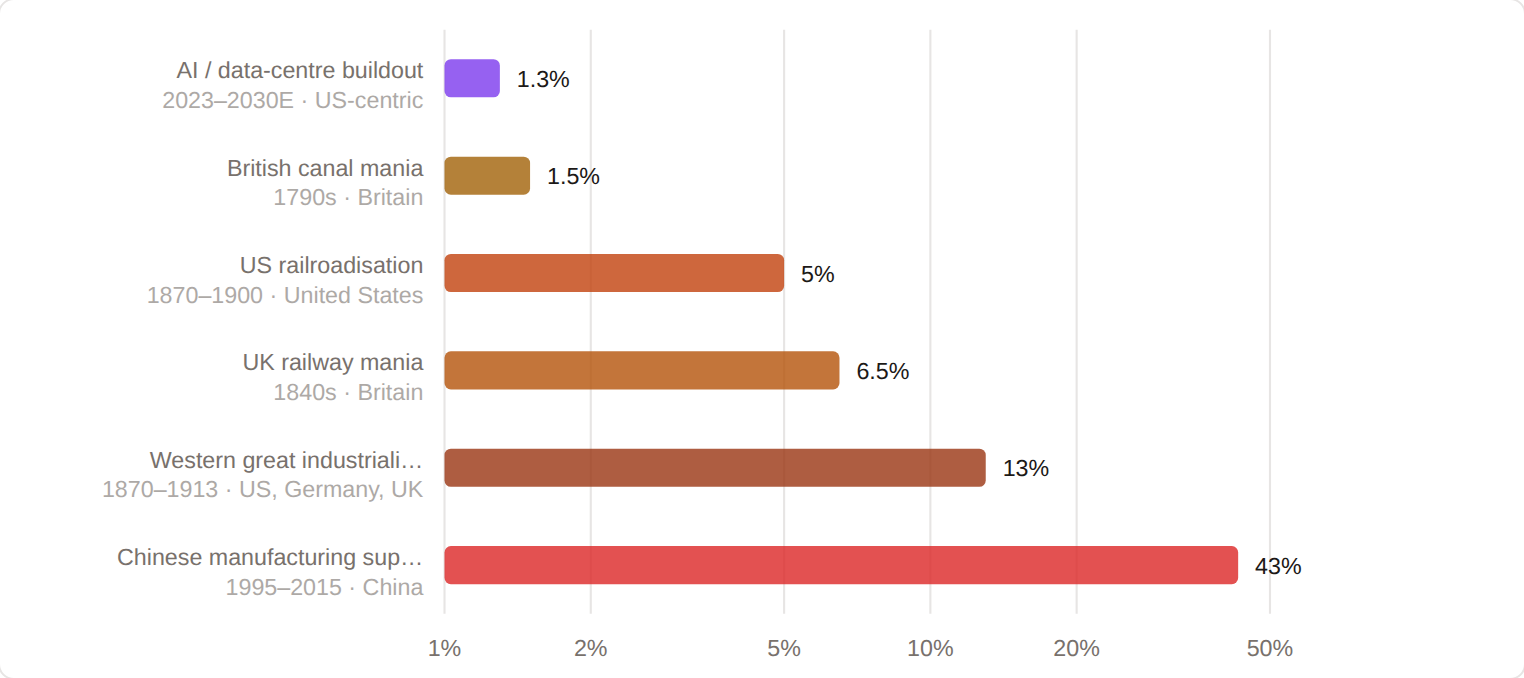
The AI buildout measured GDP-to-GDP against the Chinese manufacturing supercycle, the great Western industrialisation and the railway and canal manias before it — a railway mania, not yet a China supercycle.
- How many factories are there in the world?
A data-driven sizing of the planet's ~10 million factories — their output, workers and value added, broken down by vertical, by country and by the era they were built. First of three companion sizing pieces, with a documented methodology.
- The factory capital stock
What the world's factories cost to build — the total capital invested, net of depreciation, set against output, and the manufacturing capex supercycle: China versus the rest of the world.
- The Gell-Mann Amnesia Effect — a reader's summary
Michael Crichton's 2002 speech naming a physicist's offhand observation: you spot every error in a news story about your own field, then turn the page and trust the next one anyway.
- Chinese manufacturing plants
The same map for mainland China — from the Pearl River and Yangtze deltas to the northeast — sized, dated and tagged by process, growth and pain points.
- European manufacturing plants
The same map for Europe — the EU, the UK and Türkiye's western edge — with each plant's specialization, size, growth trajectory, process and pain points.
- Goodhart's Law — a reader's summary
Charles Goodhart's 1975 monetary-policy paper, Marilyn Strathern's one-line 1997 version everyone quotes, and why it now describes KPI dashboards and reward-hacking AI agents equally well.
- Greater-Paris waste producers
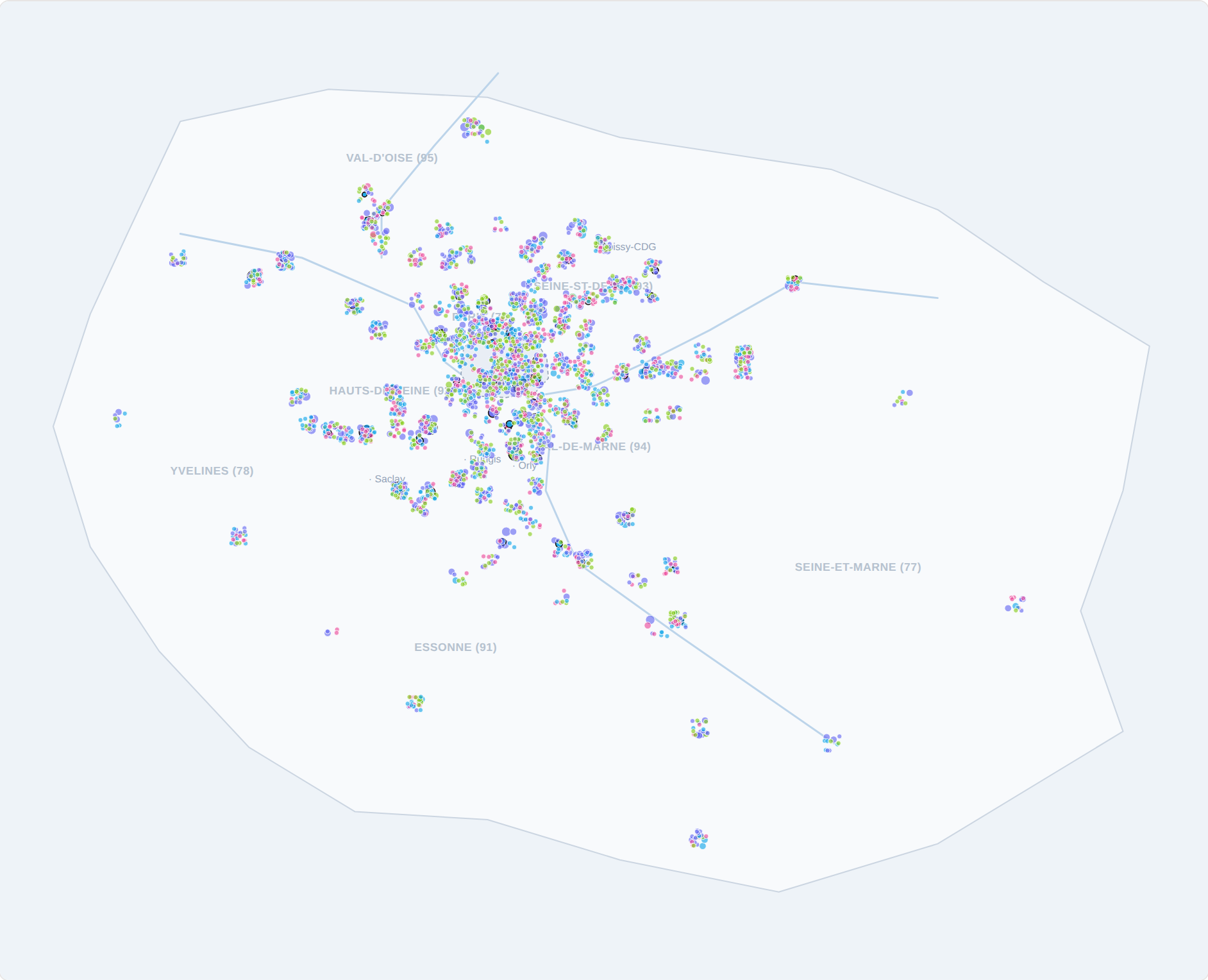
A map of the ~3000 actors most likely to produce collectable waste across Île-de-France — manufacturing, healthcare, public sector and food service — each with an estimated waste tonnage and annual waste-management budget, plus a documented methodology.
- India & South-West Asia manufacturing plants
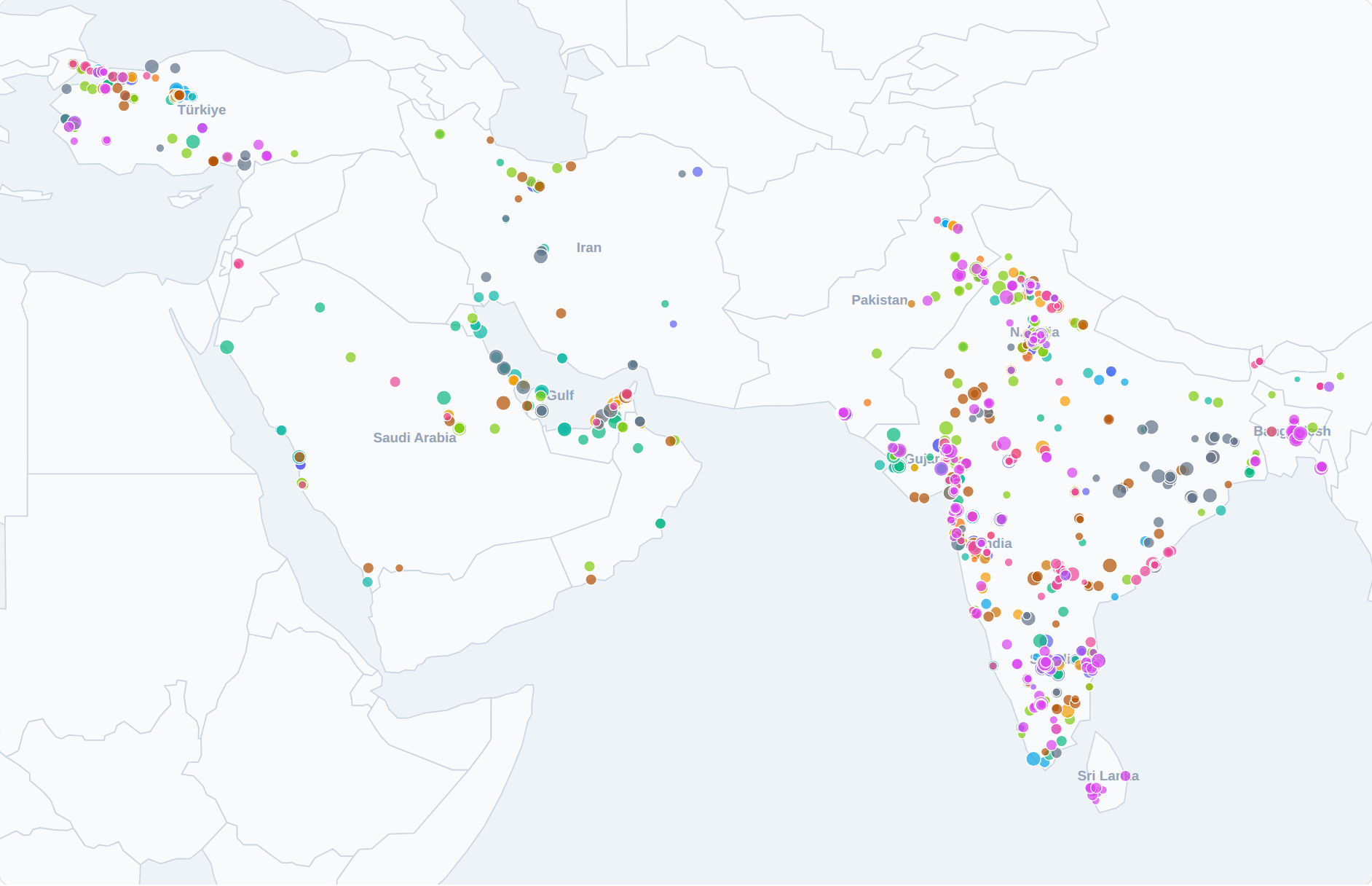
The same map for India and South-West Asia — the subcontinent, the Gulf, Iran and Türkiye — one dot per notable factory, tagged by sector, growth and process.
- US manufacturing plants
A map of the most notable factories in the contiguous US — their specialization, size, founding year, growth trajectory, dominant production process and pain points; recolor by sector, growth or process.
- Metcalfe's Law — a reader's summary
Robert Metcalfe's Ethernet sales pitch, George Gilder's 1993 n² formalization, and the 2006 paper that argued the real exponent is smaller.
- Aggregation Theory — a reader's summary
Ben Thompson's framework for who wins on the internet — zero marginal cost, commoditized supply, and the feedback loop behind Google, Amazon and Facebook.
- Companies & their business lines
Every company from the map, with its main business lines and assets — one card per line.
- Company map
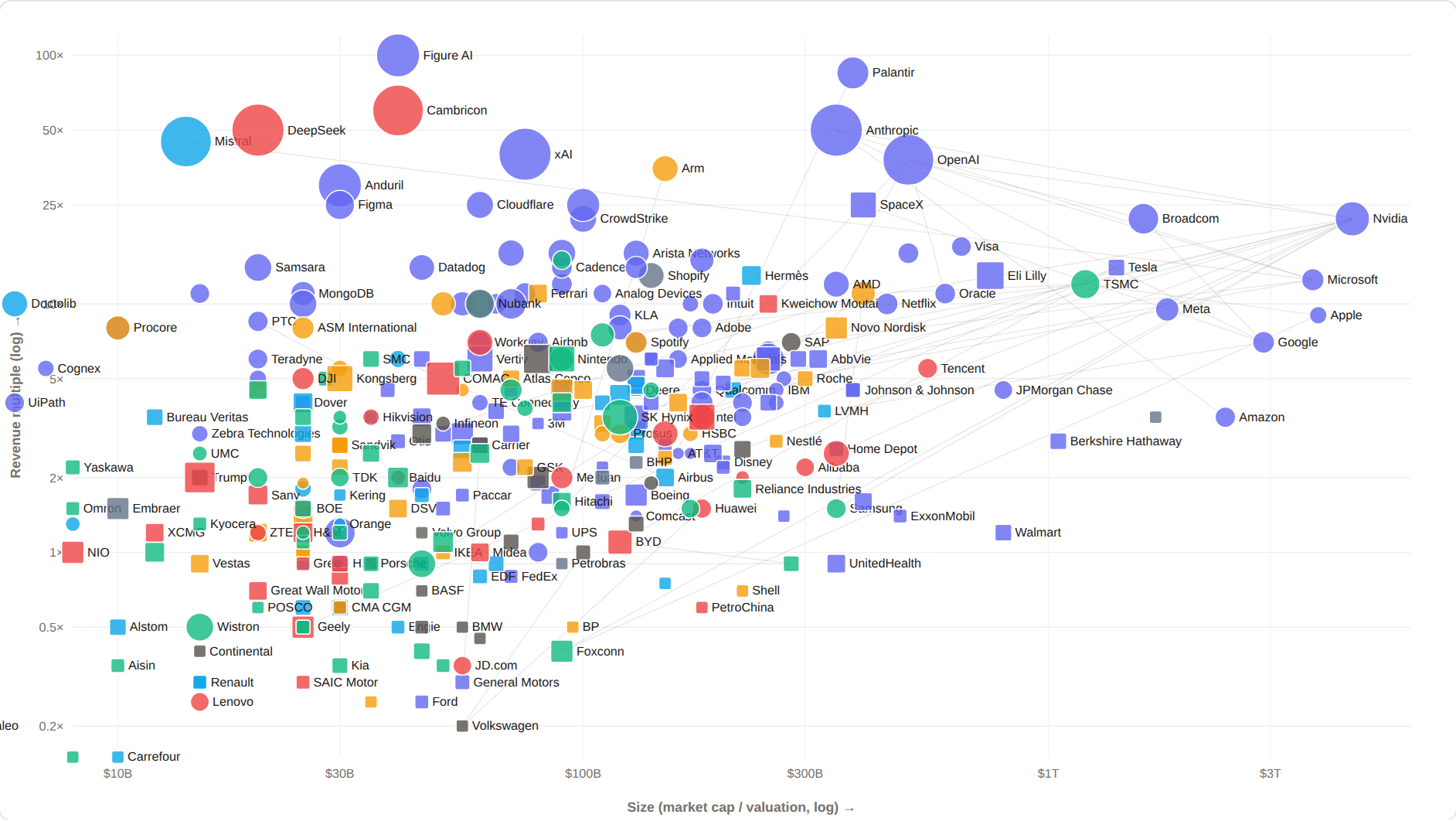
The companies that matter for technology and manufacturing — size × multiple, sized by growth, linked by business relationships.
- Distillation — how models copy models, and how you catch them
Capability at API prices instead of compute prices: what distillation is, the watermarks it leaves, and the GLM-5.2 versus Mythos affair. Also in Maths & Science.
- Enshittification — a reader's summary
Cory Doctorow's three-stage theory of platform decay, and the four disciplining forces that used to prevent it.
- FOMO — a reader's summary
Dan Herman's 1996 research and Patrick McGinnis's 2004 acronym, the 2013 psychology paper that measured it, and how feed design turned a feeling into a business model.
- The Attention Economy — a reader's summary
Herbert Simon's 1971 diagnosis that a wealth of information creates a poverty of attention, and how platform design turned it into an engineering discipline.
- The factory as institutional fact
Why operations software is constitutional law, and what AI agents change. Also in Philosophy.
- The Hook Model — a reader's summary
Nir Eyal's 2014 four-step framework for building habit-forming products, its roots in reinforcement psychology, and the ethics backlash it drew from its own author.
- The price of a token
Token prices, the market where unit price collapses while spend explodes, and where token share is going.
- The token: an anatomy
What a token fundamentally is, who captures the margin, where the bottlenecks sit, and what is — and is not — compatible.
- Who serves the tokens?
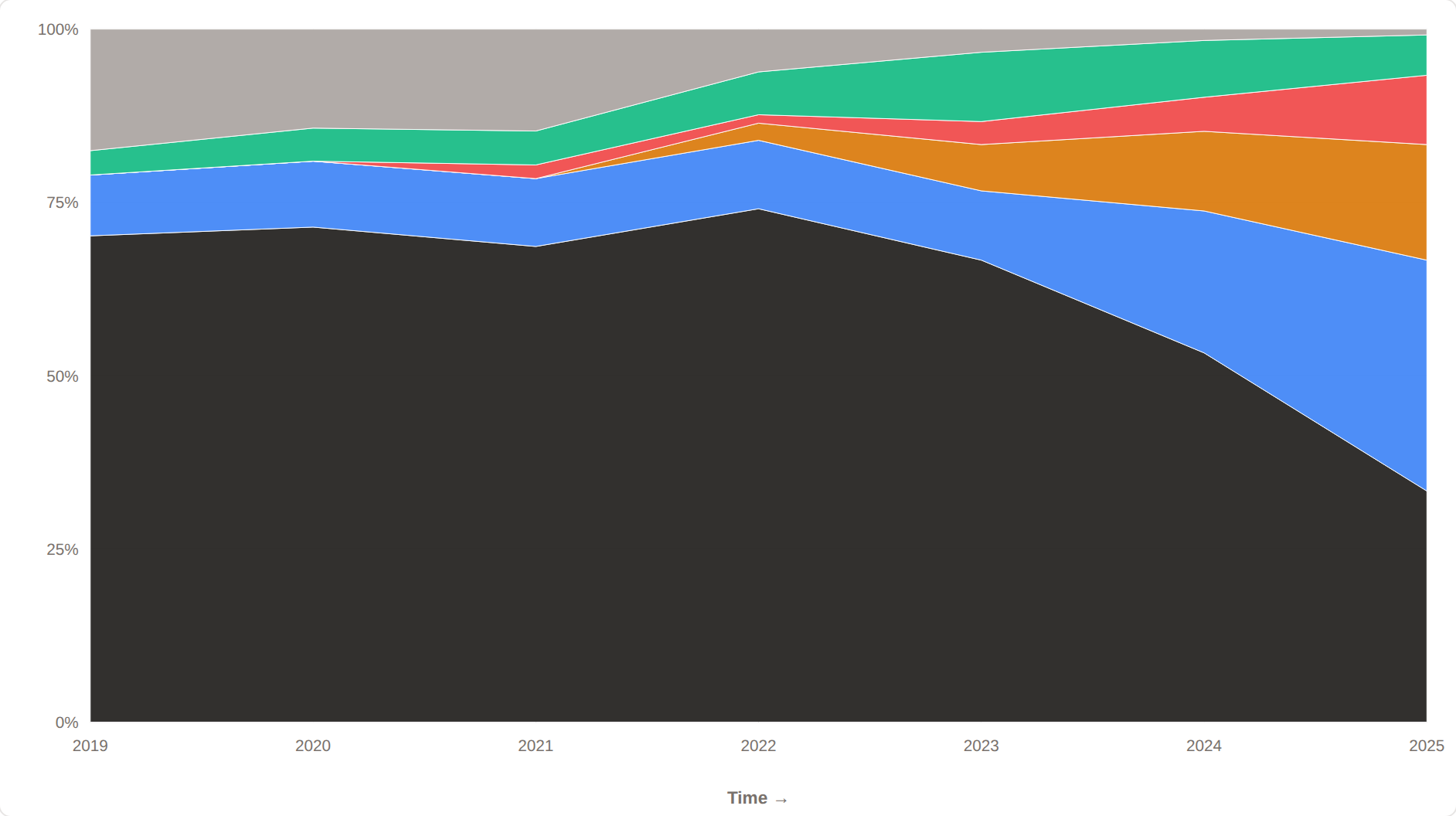
The estimated share of LLM tokens served by each model family over time — the AI era's forms-of-rule chart.





.jpg?width=800)


_-_Google_Art_Project.jpg?width=800)





_-_WGA14829.jpg?width=800)





_-_Google_Art_Project.jpg?width=800)