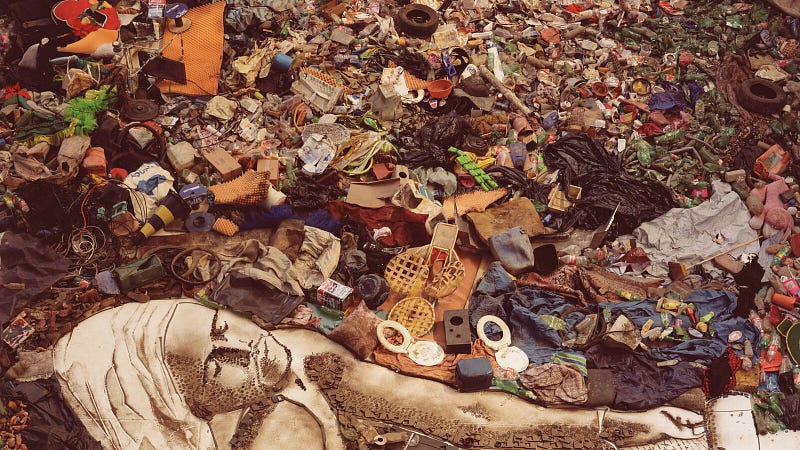
1. The itch we couldn’t scratch
Industrial waste has been on our radar for years. It’s the kind of systemic inefficiency that makes you want to fix things. But every time we looked closer, we backed away. It’s messy. It’s opaque. It’s political. It’s extremely fragmented. And — most damningly — we couldn’t find a founder who was both ambitious and experienced enough to tackle it.
That changed with Mehdi Ben Abroug.
Mehdi had a rare profile: Rocket Internet-trained marketplace maker, Flixbus executive turned founder of a successful healthcare transport marketplace. Operational grit and marketplace instinct in one. Transportation know-how for years. He knew how to scale and how to fight entrenched systems. So we pitched the idea that had been stuck on our backlog for years.
And he said yes.
2. The incentive problem nobody talks about
We started with what we always do: talking to factories.
More than 100 industrial sites interviewed. And we found an uncomfortable truth: the waste management industry is structurally anti-recycling.
Most players make money from volume — more waste, more pickups, more invoices. “Cost plus” pricing dominates. If your truck is half-empty, it doesn’t matter. You’re still billed. Optimization? Actively disincentivized.
One visionary site taught us what was possible. They manually built a system where waste was sorted, sold, and transported once a year — yielding +100K€ in margin versus paying 200K€/year. A zero-to-one transition in waste logic.
The catch? It took dozens of hours, negotiations, logistics, and was totally unsustainable without software.
That was the spark.
3. The product vision that emerged
Factories can no longer afford to treat waste as a fixed cost. The unit economics, environmental pressure, and industrial transition require something better.
We envisioned a system where:
- Factories sort and characterize their waste types precisely;
- AI finds best outlets based on material, volume, and regulatory constraints;
- Dynamic pricing meets procurement logic;
- Transportation is consolidated, optimized, and benchmarked;
- The factory gets a P&L per waste stream, not just a waste budget line.
The key? The product had to feel like a waste category manager had joined your team. One that never sleeps and never forgets.
That became Cinqo.
4. The team to build it
We called Laure.
Laure was not just a high performer in waste management — she was the rising star of the sector, having recently climbed the ranks at Europe’s leading waste conglomerate. Ironically, her first internship had been with OSS years ago. Full circle moment.
Convincing her to leave a top salary and career track was not easy. But once she saw the scale of what Cinqo could do — financially and environmentally — she jumped in. We’ve been in awe since.
5. Early traction that shocked us
In just a few months, Cinqo onboarded 60+ factories. Across sectors. Across regions. The results?
- 40% reduction in waste budget
- Significant CO₂ emissions avoided
- New revenue streams from byproducts
- Daily usage from plant managers and HQs alike
Factories finally had something better than Excel and hope.
6. A boardroom surprise
When we brought Hampus Jakobsson from Pale Blue Dot into the cap table, we thought we were bringing in a climate-focused fund.
What we got was one of the sharpest entrepreneurial minds we’ve had on a board. Hampus’ ability to pressure test go-to-market assumptions, cut through BS, and keep us honest was invaluable.
It also changed how we think about climate investors. Passion for sustainability is great — but paired with business-first clarity, it’s a superpower.
Here’s to…
- Factories with smarter waste systems than most cities.
- Founders brave enough to enter unsexy industries and change them.
- Teams that turn broken incentives into aligned ones.
- And co-building businesses where profit and sustainability are not in opposition — but perfectly aligned.
Here’s to Cinqo.