At OSS Ventures, we invest in and co-build the software stack for the future of industrial operations. Relief is one of those rare projects that evolved from intuition to conviction — and eventually into a company that feels both timely and necessary.
This is the story of how we got there.
It started with a tip
Most great adventures don’t start with a business plan. Relief started with a WhatsApp message: “You should meet Mickael Mamou — he’s the real deal.” Thank you, Mehdi Ben Abroug, founder of Cinqo !
So we did.
There are people you meet and immediately know they’re wired differently. Mickael is one of them. Not just because he had been close to the factory floor or understood quoting systems. But because he had the unusual ability to listen deeply, ask precise questions, and not settle for the obvious. He was relentless — not in pitching ideas, but in seeking truth.
We weren’t yet sure what company we’d build. But we were sure we wanted to build with him.
That was enough.
From quality to quoting — and beyond
We kicked off our process the OSS way: field work. We talked to over 500 manufacturing professionals, from owners to project leads to quality managers. Early on, we were looking into quality management systems. That seemed like a logical entry point — compliance burdens, document control, and traceability headaches.
But in one interview, a line stood out:
“Honestly, most of our time in quality isn’t about production. It’s about validating new projects so we can actually quote them right.”
That offhand comment lit a fuse.
Again and again, we heard that what was framed as “quality work” or “engineering” was actually pre-production. A hidden layer of effort poured into trying to understand if a new part, a new process, or a new client spec was feasible — and at what cost. Quality professionals, supply chain leads, even operators — all feeding into the quoting engine. For the anecdote, we even got one meeting (about quality) cancelled because “urgent client need for a new quote” (product market fit signals are sometimes subtle).
We shifted our attention, and the pain became visible.
A quiet industrial crisis
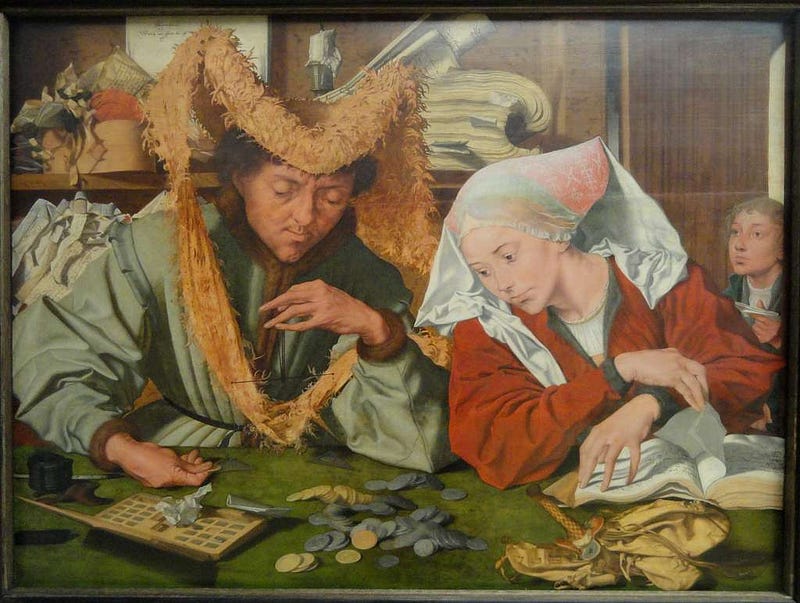
There is a systemic, underappreciated problem in industrial SMEs: quoting is broken.
We saw Excel files passed down like family heirlooms. Pricing logic built on gut feeling. ERP systems with barely-used quote modules. In some factories, we found parts being manufactured at a loss — simply because no one had updated the cost assumptions in years. It wasn’t rare. It was structural.
You’d think CPQ (Configure Price Quote) tools would have solved this. In theory, they’re made for this purpose — combining configuration logic, cost modeling, and pricing rules.
In practice, they haven’t. In our interviews with mid-sized manufacturers, penetration of CPQ software was under 5%. The tools are either too rigid, too expensive to customize, or just too far removed from the daily logic of a factory. Without AI, the effort required to encode the rules of a factory — its machines, people, and edge cases — is just too high.
So most don’t even try.
And yet quoting is a core process. It’s the bridge between sales and production. Getting it wrong compounds over time. Getting it right is the difference between growth and decline.
This was not a “nice-to-have” problem. It was a silent tax on the entire industrial economy.
A moment of clarity
Sometimes, progress comes in quiet moments. One such moment happened with a Swiss manufacturer who agreed to open the books, the tools, and the problems — without filters, without slides.
We were supposed to stay an hour. We stayed four.
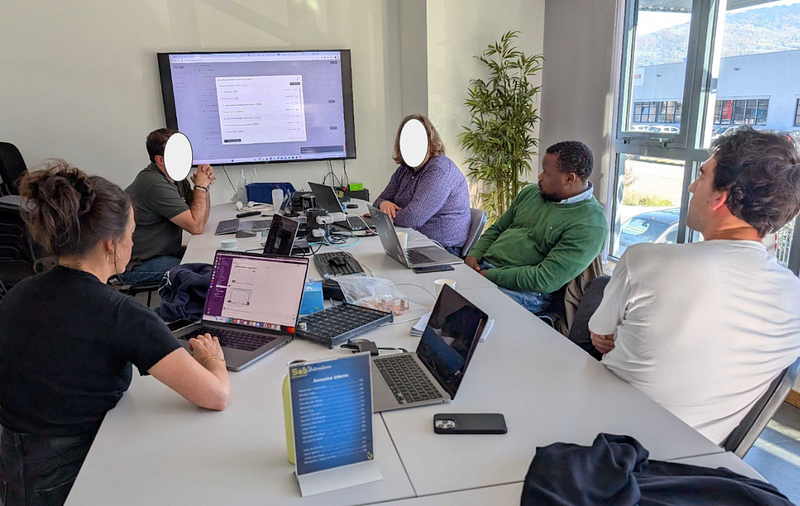
He walked us through his entire quoting and validation process. Every assumption, every friction point, every place where people were manually compensating for what systems couldn’t do.
That day, we didn’t just see a company. We saw an ecosystem. One where the people closest to the problem had the least tooling to solve it — and where fixing that wasn’t just about software, but about trust.
The humility and clarity of this executive was remarkable. He didn’t have to let us in. But he did — because he believed, like we do at OSS, that better systems help better decisions, and better decisions help entire industries.
That afternoon shaped the first draft of the product roadmap. Not because we dreamed it up — but because someone took the time to help us help him.
That’s what OSS is about. Listening first. Building second.
Speed and conviction
Once the problem was mapped, execution followed fast. Jonas Levy — who had joined as tech co-founder — built the first usable version in under two weeks.
That’s not a legend. That’s OSS tempo.
The early version already allowed manufacturers to price and validate new items with rules, assumptions, and logic closer to their real operations. We weren’t trying to replicate the ERP. We were trying to bridge the gap between what’s known, what’s guessed, and what’s possible.
It resonated. Fast.
A blended AI approach
From day one, we knew Relief wouldn’t just be deterministic code. Quoting in manufacturing is a strange beast: part fixed logic, part fuzzy memory, part human gut.
So we built a hybrid.
Deterministic logic handles the parts that must be exact: machine time, labor, material prices. AI assists with what’s uncertain: similar parts in the past, anomalies in BOMs, estimation patterns, forgotten setups.
And we’re learning — a lot. Especially about what happens when AI tries to operate in environments with legacy systems, uneven data, and local know-how. The key isn’t replacing human logic. It’s surfacing insights quickly enough that people can act, not guess.
A strong start
We always look at early traction as a test of clarity.
In a few short weeks, Relief onboarded over 10 manufacturing companies — not through hype, but through word of mouth.
No outbound. No pitch decks. Just users talking to users. That’s the kind of signal we look for.
This isn’t about features. It’s about fit.
A great round, the right partners
The company raised its first round in under four weeks. We’re grateful to welcome Daphni, Galion.exe, and other outstanding investors onboard.
We’ve seen this moment before — when a product connects to a real-world pain with this level of immediacy. It’s the kind of moment where everything is in motion, but also just beginning.
Here’s to Mickael, Jonas, and the growing Relief team.
Here’s to the Swiss manufacturer who opened the doors and gave us the gift of clarity.
Here’s to every industrial leader trying to make better decisions, with better tools.
Here’s to Relief.